
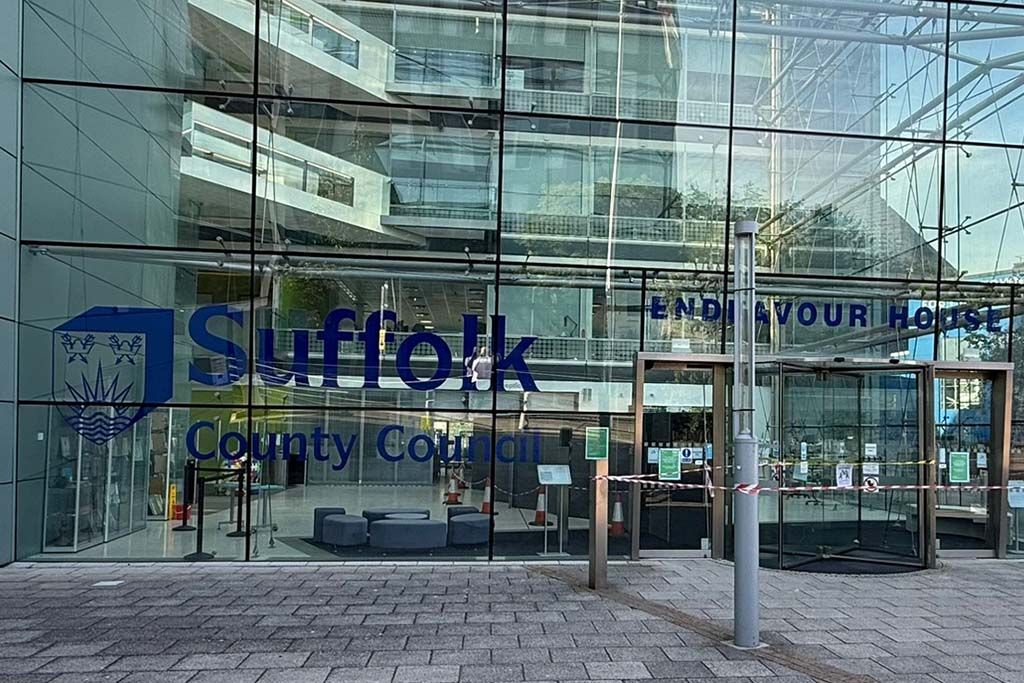
Reform took control of Suffolk County Council in May, promising transparency. By the end of June, the council had broken its own rules twice. That is not my claim. It is the finding of the council’s own watchdog: the senior official, called the Monitoring Officer, whose job it is to make sure the council follows the law. His conclusions were reported this week by the BBC, Suffolk News and Ipswich.co.uk.
The rules were broken in the handling of the Leader’s biggest decision: committing £500,000 or more of your money to a court case over the replacement of Suffolk’s six councils with three. It was decided by one man, at speed, with no limit on the cost, and it was already filed at court before any councillor had voted on it.
It is now so serious that the watchdog will make a formal report to the council’s leadership under a law reserved for the most serious rule-breaking. It is so rare that no one can recall it ever happening in Suffolk before.
And there is a special irony here. The council’s entire court case is an argument that proper process was not followed. Its own watchdog has now confirmed that the council broke its own rules twice in the way it launched that very case. A council that goes to court to demand proper process from others should at least be able to follow its own.
None of this came out of nowhere. Since June, your Labour councillors have been asking one set of simple questions: who decided, with what authority, at what cost, and with what limit on that cost. Step by step:
25 June — The court case had already been filed, but there was no public record anywhere of the decision to bring it. Residents and councillors simply weren’t told. I formally asked the council where the record was. It appeared the next day, eight days after the decision was made. That eight-day delay is one of the two rule breaches the watchdog has now confirmed.
29 June — The Cabinet met to decide whether the case, already started by the Leader, should continue. Cllr Colin Kreidewolf and I put questions to them directly. I asked why the decision record had taken eight days and a councillor’s request to appear. Colin asked whether they had read the court claim they were voting to continue. Not one could say they had. That is no way to commit half a million pounds of public money.
29 June — I formally asked the council’s lawyers a direct question: had the law been broken in how this decision was made? The watchdog has now answered. Yes, twice.
29 June — I asked for the whole matter to be examined by the council’s Scrutiny Committee, the cross-party group of councillors whose job is to check decisions are made properly. That examination is due on 1 October.
1 July — Normally, councillors have the right to pause a decision like this so it can be properly examined before it takes effect. The administration removed that right by labelling its decision “urgent.” I joined Green and Conservative councillors in formally challenging that label. The challenge was dismissed, we heard this week, for reasons that have still not been published.
2 July — I wrote to the Leader inviting him to put a cap on what the case can cost you. Five weeks on: no reply, and still no limit of any kind on the spending.
14 July — At Cabinet, I asked the Cabinet Member for Finance, Cllr Vicky Armstrong, for a simple assurance: that every major commitment of public money has a clear limit and proper councillor oversight. No such assurance was given.
16 July — At a meeting of all councillors, I put it to Cllr Armstrong again: I could find no financial limit on the court case anywhere, so where was it set? She said she would check and come back to me. Three weeks on, I am still waiting.
16 July — At the same meeting, Cllr Adele Cook challenged the Leader’s written account of how the case came about, asking him to correct it. She then pointed out that, more than two weeks on, the minutes of the Cabinet meeting that confirmed the case still had not been published.
The council’s response to all this? It calls the rule-breaking “minor procedural matters.” But think about what those procedures are for. The rules that were broken exist so that you, and the councillors you elect, know a decision has been made while there is still time to question it. As I said to reporters this week: it is impossible to challenge a decision that we do not know has been made.
The council says the rule-breaking was accidental. What has happened since is not. It is a choice, being made right now, by the Reform administration: call the findings minor, refuse to publish the report, refuse to say when any of this will reach a public meeting, and complain that residents found out at all. Reform came to power promising to throw open the council’s books. A few months in, that promise is in tatters.
A council confident it had acted properly would find three things easy: publish the report, blanking out only what genuinely must stay private; bring the watchdog’s findings to a public meeting now, not in the autumn; and put a limit on what this case can cost you.
Cllr Martin Cook is Labour Group Leader at Suffolk County Council and county councillor for Rushmere.